A Century of
Steel & Spirit
Every bottle carries a story, and so does every brick. One city block, one hundred years, told the way it happened. Year by year. Wall by wall.
1890 to Today
Before the building, there were the tracks.
The Great Northern Railway established its St. Cloud freight shops in 1890, laying iron across the Minnesota plains and pulling the city's commercial center east toward the river.
The rails shaped the block long before the address existed. Three sets of tracks wrapped around a single corner on East St. Germain, and whatever rose here would be made on site, loaded at the door, and sent out across the country.
The rails shaped the block long before the address existed.
For nearly four decades the corner waited. The ground was ready long before anyone claimed it. When industry finally came looking for a home in Central Minnesota, the choice had already been made.
3
Sides of rail
1890
Freight shops opened
38
Years before the build
It was not built to be delicate. It was built to last.
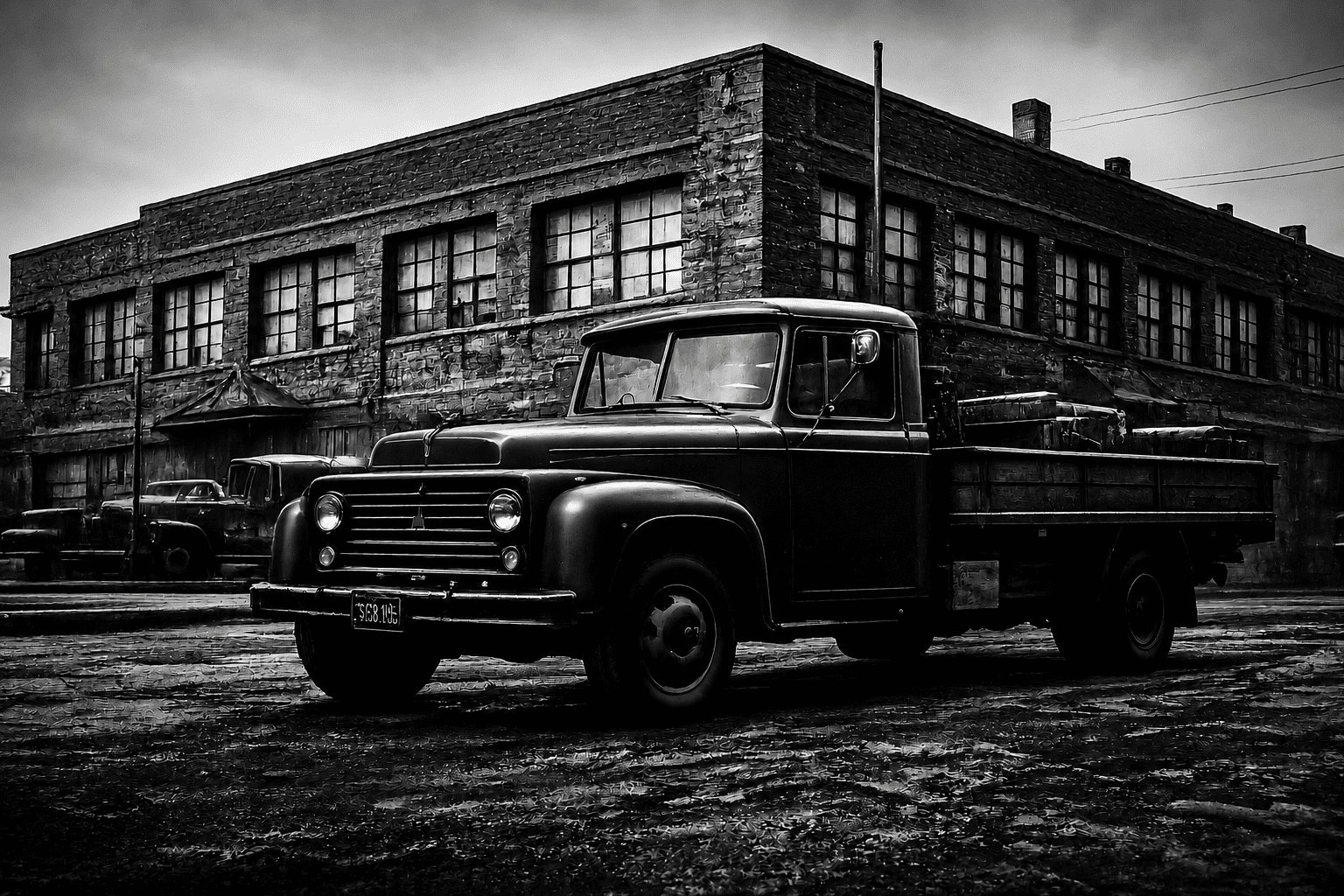
International Harvester broke ground at 539 E. St. Germain and built one of Minnesota's most impressive industrial buildings of its time.
Steel columns. Maple floors. Exposed brick. Wide-open space built for machinery, freight, and hard work. Nobody here was chasing beauty. They wanted a building that could take a century of hard use, and that kind of honesty turns out to be beautiful all on its own.
It was not built to be delicate. It was built to last.
Opening day brought a parade of 162 International Harvester "Red Baby" trucks down St. Germain, the same truck that rides on the back of our rum bottle today. For the next four decades, this corner was one of the hardest-working industrial addresses in Central Minnesota.
63,560
Square feet
162
Red Baby trucks
1928
Still standing
The law said no. The land said otherwise.
During Prohibition, Stearns County farmers became nationally known for making exceptional moonshine. The community protected its own.
The Volstead Act outlawed alcohol in 1920. Most of the country went along with it. Stearns County politely declined. The county had been settled by German and Austrian Catholic farming families who carried generations of distilling knowledge with them, along with a corn variety that proved perfect for whiskey.
Minnesota 13 became more than corn. It became legend.
The whiskey was good. The demand was high. Bootleggers drove north to fill their trunks. Revenue agents raided farms week after week and went home with little to show for it. We carry that same tradition forward today, legally, proudly, and without apology.
1920
Volstead Act
13
The corn strain
#1
In America
Kevin saw steel, brick, maple, and possibility.
By the time Kevin Johnson purchased the building, it had seen nearly a century of hard use.
Some saw an old structure. Kevin saw what the building still was, and what it could become. He was a commercial contractor, and he knew exactly what was standing inside those walls. The steel. The original timber. The maple floors laid in 1928.
You can always build something new. You can't build something that's already stood a hundred years.
He refused to let the building's story end there. On December 1st, 2021, he signed the papers. A year and a half of renovation followed. The building that almost came down is now the address of Central Minnesota's first distillery.
~100
Years of hard use
12·01·21
Closing day
18 mo
To renovation
Central Minnesota's first distillery.
After a year and a half of renovation, Iron Street Distillery opened its doors.
The rails still run on three sides. The brick still stands. The floors still carry the weight of history. Iron Street Distillery opened in 2023 as the first licensed distillery in Central Minnesota, with six spirits distilled on site from local grain.
Every bottle is named for something you can see, touch, or feel inside the building.
The cocktail room seats 80 on the old Harvester showroom floor. The event hall upstairs seats 500 on maple laid in 1928. The building is nearly a century old. The distillery is just getting started.
6
Spirits on the menu
80
Cocktail-room seats
500
Event-hall seats
The building is part of St. Cloud's past. The distillery is part of what comes next.
Iron Street keeps growing with new spirits, new events, new partnerships, and new reasons to gather on the east side.
The story doesn't end with an opening. It ends when people stop showing up, and they haven't. New spirits are coming off the still. New events are filling the hall. New partnerships are taking root in a building that was nearly lost.
The story isn't finished. It's just getting good.
The east side of St. Germain has been a place where things get made for over a hundred years. That's what this building does. That's what we do. Come see what we're working on.
New
Spirits coming
New
Events & partnerships
Open
East St. Germain